
Increasing stringency of emissions regulations and various governmental incentives for sustainability have shifted the world toward electric vehicles (EVs). The lithium-ion batteries used in these vehicles require graphite as one of their primary components.
Moreover, nations that import these electrodes frequently impose a type of tariff on exporters called anti-dumping duties. This helps protect domestic businesses from unfair competition.
A resurgence in demand for electric vehicles (EVs) and other energy storage solutions is driving growth for the graphite electrode market. EV batteries rely on lithium-ion technology, and a single EV requires approximately 80 kg of high-quality graphite to manufacture. The resulting increase in battery production is boosting demand for both flake and natural graphite, as well as the petroleum coke used to produce it.
The market is dominated by a few major players that enjoy strong economies of scale and access to strategic resources. GrafTech International, for instance, is vertically integrated into petroleum needle coke supply through its Seadrift facility and operates some of the world’s highest-capacity electrode plants. The company’s recent acquisition of a North American graphite deposit could help it reduce its dependence on imports, as well as mitigate the risk of geopolitical tensions disrupting supply chains.
Asia Pacific holds the leading position in the global graphite electrode market, driven by rapid industrialization in nations such as China, India, and South Korea. The region also enjoys robust mining infrastructure and significant government incentives for EV manufacturing. In contrast, North America is a promising growth segment, thanks to a growing focus on domestic EV production and a desire to minimize reliance on imports from politically sensitive regions.
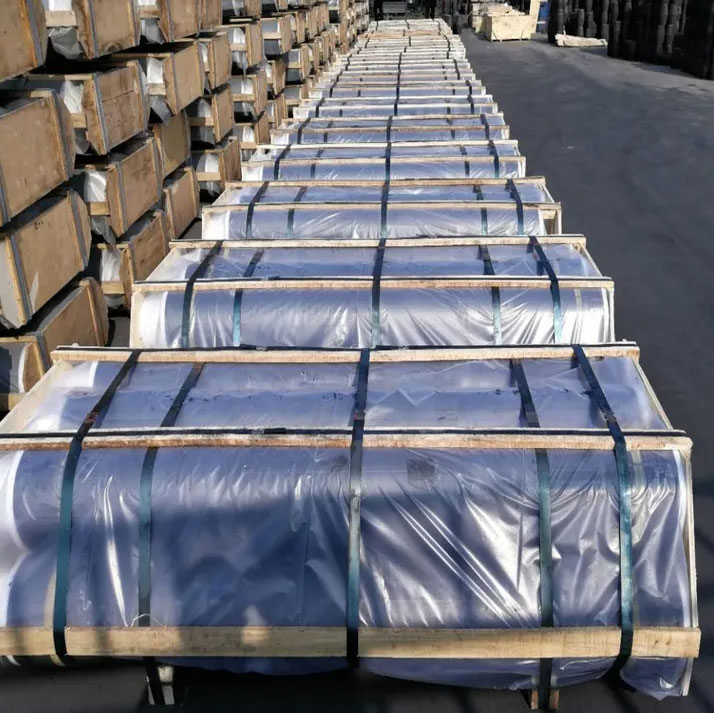
Needle coke is the key raw material for producing graphite electrodes, an essential component of electric arc furnaces used in steel production. Its superior conductivity, high thermal resistance, and low thermal expansion properties also make it useful for manufacturing anodes for lithium-ion batteries for use in EVs and portable electronics. This market is characterized by high barriers to entry, with only the top 7 producers commanding more than 35% of industry share.
Amid rising global demand for sustainable and renewable energy, needle coke is increasingly being used in a variety of sectors including the steel industry, lithium-ion battery production, and the electronics industry. Asia Pacific is the world’s largest consumer of needle coke, led by a vibrant steel industry, followed by a rapidly growing graphite battery industry and electronics sector.
Key success factors for the graphite electrodes industry include technological advancements, security of raw materials supply, and alignment with decarbonization trends in end-use applications such as EVs and lithium-ion battery anodes. Producers with a vertically integrated business model and secured long-term supply agreements enjoy competitive advantages over those that source their products from independent sources. Further, advanced refining and calcination technologies enable manufacturers to produce progressively pure and uniform needle coke grades that meet the strict quality requirements of their downstream customers.
As the market for EVs and batteries continues to grow, the demand for graphite electrodes will increase. These are used in electric arc furnaces (EAF) to conduct electricity and melt raw materials. EAF technology is more sustainable and energy-efficient than blast furnaces, and it also produces less carbon emissions. This is driving the steel industry to shift from blast furnaces to EAFs, increasing the demand for graphite electrodes.
The Middle East is another major market for graphite electrodes. The region’s ongoing industrialization and rapid urbanization drive the need for steel, fostering the growth of the graphite electrode market. In addition, stringent environmental regulations encourage low-emission steelmaking, further boosting the market’s growth.
Increasing energy prices, however, could limit the graphite electrode market’s future. The production of graphite electrodes requires premium petroleum coke, and it can be difficult to meet rising energy costs while maintaining stable manufacturing costs.
Since China’s Blast Furnaces started closing down last year, EAF Steel manufacturers stepped in to fill the void and graphite electrodes went from being a surplus product to an extremely valuable resource. This prompted Nomura to revise its earnings target for Showa Denko, predicting that graphite electrode prices will peak at $8,500 per tonne before moderating. This is well above the price of $6,200 per tonne that was predicted back in April.

 English
Write a Message