Graphite Electrode market responsiveness is driven by steel industry demand and increasing use of electric arc furnaces (EAFs).
The industry is highly dependent on raw materials, primarily petroleum-based needle coke and coal-based green coke. Fluctuations in the price of these inputs impact production costs and drive pricing volatility.
Local producers supply domestic markets and export regionally. Major players form strategic alliances and expansions to secure access to raw materials.
The global graphite electrode market is relationship-driven with most sales occurring through direct business-to-business channels. Manufacturers often enter into supply agreements or contracts directly with steelmakers and furnace operators. Online procurement tools are used less frequently, with online sales occupying under 10% of the overall market.
The sector is benefiting from the steel industry’s transition to electric arc furnace (EAF) technology, which drives demand for advanced electrodes that require higher quality raw materials. Environmental regulations are also encouraging EAF use, boosting demand for high-grade electrodes that can meet stringent emissions standards.
Pricing volatility remains a key challenge for the market, reflecting correlations between steel production and graphite electrode prices. Moreover, the industry depends on premium petroleum coke as a raw material and can be vulnerable to unforeseen changes in needle coke availability or oil price fluctuations. Consequently, some major manufacturers invest in their own coke-making plants or secure long-term needle coke supply agreements to improve stability and reduce production costs.
The large-size graphite electrode market is dominated by a few established manufacturers. They offer diversified products and services and have established manufacturing networks across the globe, offering high growth potential. Despite this, the industry has high entry barriers due to specialized manufacturing processes and technical expertise. New entrants may face difficulty in meeting demand and maintaining stable production costs due to limited supply of raw materials.
Graphite Electrode prices tend to fluctuate with the health of the steel industry and needle coke availability. During periods of strong steel demand, the market experiences higher prices as mills compete for supplies and capacity. However, continuous research is helping to improve electrode quality and lifespan, reducing consumption rates and overall production costs. In addition, the expanding scope of non-steel applications is boosting demand for the product in sectors like glass manufacturing and chemical processing. This helps to reduce the market’s historical dependency on the steel industry. This is expected to boost market growth in the near future.
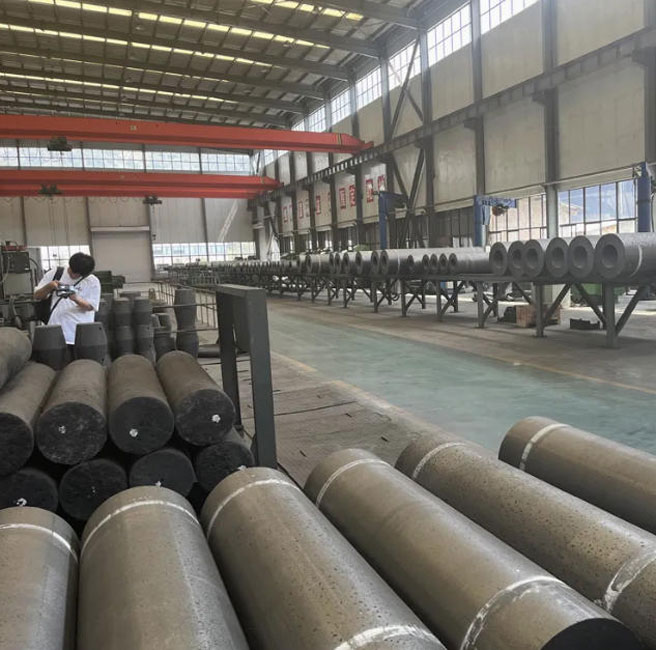
Graphite Electrode production is closely tied to the steel market. Thus, it is a highly responsive market to changes in the health of the steel industry, resulting in a high correlation between the electrodes and steel production rates.
Despite the impact of the COVID-19 pandemic, the market is recovering at a steady rate. This is driven by a number of factors including a growing demand from the steel industry, increased construction activities in emerging economies, and stringent environmental standards that require the use of greener technology for steel production such as electric arc furnaces.
The market is moderately consolidated with regional players such as Chinese (Jianglong Carbon, Jiexiu Jinsheng, Qifeng), Indian companies (SEC Surface Engineering, HEG's Graphite India), and European firms (Markt fur Graphitelektrodenverbindungen) competing for global market share. The success of these companies is based on their ability to balance operational efficiency with technological innovation and sustainable production methods. They also seek partnerships and expansions to secure raw materials and market access.
Steelmakers are continuing to invest in EAF technology, boosting demand for specialized graphite electrodes. Environmental sustainability and regulatory requirements also push manufacturers toward greener production methods, which often use EAFs.
Regionally, Asia-Pacific remains a major consumer and producer, with China's expansive EAF sector leading the way. North America and Europe are also key markets, boosted by investment in sustainable steelmaking practices. Emerging economies in Latin America and the Middle East & Africa have less-developed capacities, but are poised to grow as new furnaces are built.
Graphite electrodes are primarily sold through direct business-to-business channels, with online sales accounting for under 10% of total market share. Despite this, manufacturers continue to focus on improving supply chain efficiency, logistics and distribution networks. Additionally, the reconditioning and recycling of spent electrodes is gaining ground as companies adopt circular solutions. This is a significant opportunity, with the market projected to reclaim over 60,000 tonnes annually by 2026.

 English
Write a Message