
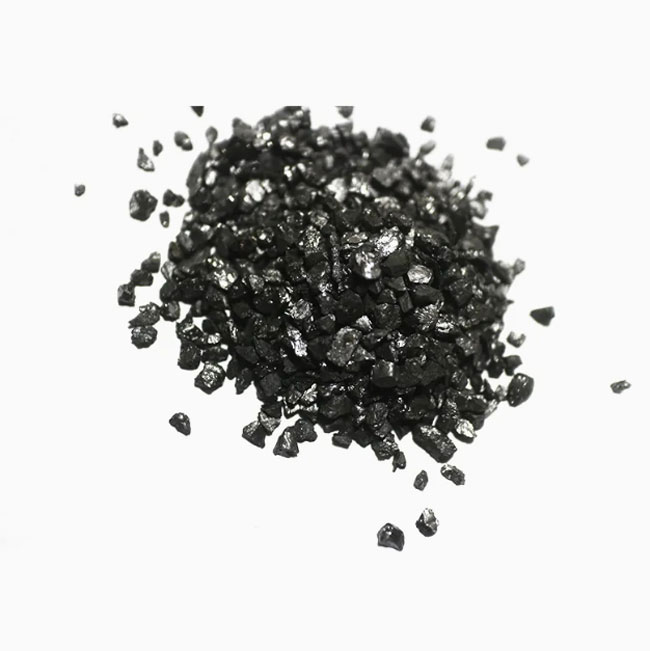
Petroleum coke (petroleum coke or petcoke) is a carbonaceous by-product of oil refining that is used as fuel in the manufacture of graphite electrodes and anodes for aluminum and steel production, and as an industrial kiln feedstock. It is low in sulfur and nitrogen, and has a high calorific value and thermal stability. The high carbon content of petcoke makes it a very attractive raw material for producing a number of high-value products, including graphite and methanol.
However, these products are often produced in a highly energy-intensive process that releases large amounts of CO2. The carbon dioxide emission from the current commercial production of high-purity graphite for lithium-ion batteries is estimated at 7772.1 tCO2 per ton of coke1.
A new process to convert petroleum coke into graphene, with low carbon and nitrogen emissions, is being developed. In this process, the calcined coke is subjected to electrochemical exfoliation under mild conditions. The resulting graphene nanosheets are separated from the unreacted material by centrifugation and characterized by Raman spectroscopy. TEM and SEM images confirm that the final product is comprised of few-layered graphene nanosheets, and the Raman peaks show a spectral signature distinct from the parent coke.
The most valuable grades of petroleum coke are needle coke and anode coke, which are used as graphite electrodes in the aluminum and steel industries. These cokes are produced from high-quality aromatic feedstocks such as fluid catalytic cracker decant oil, in a blocky sponge coke form, or in a shot size agglomerate of spherical “shots” from delayed cokers. The lowest-value grade, fuel coke, is agglomerated from lower quality coking residues and has a less crystalline morphology.
Low-value coke is also used as a fuel for power generation in the metal and brick industries, and for heating in cement kilns. The low-sulfur coke from vacuum distillation and delayed coking has the highest use value, accounting for
In the current production of graphite for lithium-ion batteries, petroleum coke is subjected to a series of processes including impurity removal, pretreatment and calcining for desulfurization and strength enhancement. The current commercial process uses natural gases, which results in a total carbon emission of 7772.1 tCO2 per ton coke (Figure 1). By comparison, the proposed process, using an inert anode and molten salt electrolysis, can achieve a similar level of graphitization while producing significantly less CO2. The lower-emissions process produces a comparable quantity of negative electrodes, but with much lower carbon emissions (Figure 1f). It is therefore feasible to make a significant reduction in carbon emission from graphite production from 2025 onward. The process can be further improved to reach zero carbon emissions by incorporating a gasification step before the molten salt electrolysis. This would reduce the energy consumption by an additional 270 kWh per ton of coke and eliminate the need for natural gas usage.

 English
Write a Message