The market is diversifying beyond its traditional steel industry applications and expanding into new sectors, including glass and chemicals. These developments are enhancing demand and providing opportunities for manufacturers to invest in research and development for novel products.
Ultra-high power graphite electrodes continue to hold the largest share of the market, owing to their high-performance characteristics. This segment’s dominance is bolstered by the shift toward electric steelmaking and stricter environmental regulations.
The increasing use of EAF technology in the steel industry is driving demand for graphite electrodes. This type of steel production is more environmentally friendly and offers a higher level of productivity. In addition, it is cheaper than traditional blast furnace technology. As a result, many manufacturers are shifting to EAF technology to meet environmental and economic goals. This is creating a strong demand for regular, high, and ultra-high power graphite electrodes.
In addition, new EAF plants are being built due to continued industrialization in developing countries. This has boosted the demand for high-quality materials and increased construction activities, which is also fueling the growth of the graphite electrode market.
Companies in the graphite electrode market are investing in R&D and capacity expansion to maintain their competitive edge. They are also focusing on securing supplies of raw materials, such as petroleum needle coke, to ensure stable production. This is expected to help limit price fluctuations, which are a major restraining factor in the graphite electrode market.
The graphite electrode market is being fueled by the demand for high-quality materials. Companies are investing in research and development to develop electrodes that can be more efficient, durable, and have higher temperature-handling capabilities. These improvements are helping to increase the market’s overall value.
Additionally, the global demand for lithium-ion batteries has increased, which is creating a need for more advanced electrodes. Graphite electrodes are used in lithium-ion battery production to provide the material for anodes and cathodes. This growth in the lithium-ion battery industry is driving the graphite electrode market’s expansion.
The Asia-Pacific region has a large share of the market due to its significant steel production capacity and continuous industrialization. The growth in this region is also fueled by the increased focus on sustainable production practices and increasing demand for infrastructure. Despite these factors, the volatility in raw material prices is hindering the market’s growth. This is because the price of petroleum coke and needle coke, which are required for the production of graphite electrodes, directly affects producers’ profit margins.
The Graphite Electrode market is expanding as companies make technological advances to improve their manufacturing processes. These improvements help them reduce the cost of production and make their products more effective for use in various applications. For example, AI-powered systems are now used to analyze data from sensors and graphite electrode production lines. This helps them to identify patterns and optimize operating parameters to maximize productivity, minimize downtime, and enhance production efficiency.
In 2024, the Latin America graphite electrode market was driven by increased steel production through electric arc furnaces (EAF). The region’s growth in various manufacturing sectors, including construction and energy, promotes EAF technology adoption. This trend is also backed by efforts to achieve sustainability goals through modernized production methods.
In the North American graphite electrode market, demand is strong from the steel industry primarily through the use of electric arc furnaces for EAF steel production. The region also benefits from growing electricity generation through renewable power and sustainable energy infrastructure development. This boosts graphite demand for battery anode applications.
Increasing focus on sustainable and energy-efficient manufacturing drives construction, automation, and infrastructure domains. This leads to higher demand for steel, boosting consumptions of graphite electrodes. Additionally, stringent environmental regulations encourage low-emission steelmaking, further driving the shift to EAF technology in the market.
North America has natural graphite reserves and established manufacturing infrastructure, which supports the growth of the regional market. Its access to these resources allows local manufacturers to produce high-quality electrodes at competitive prices. This reduces the dependence on imports and minimizes the risk of supply disruptions.
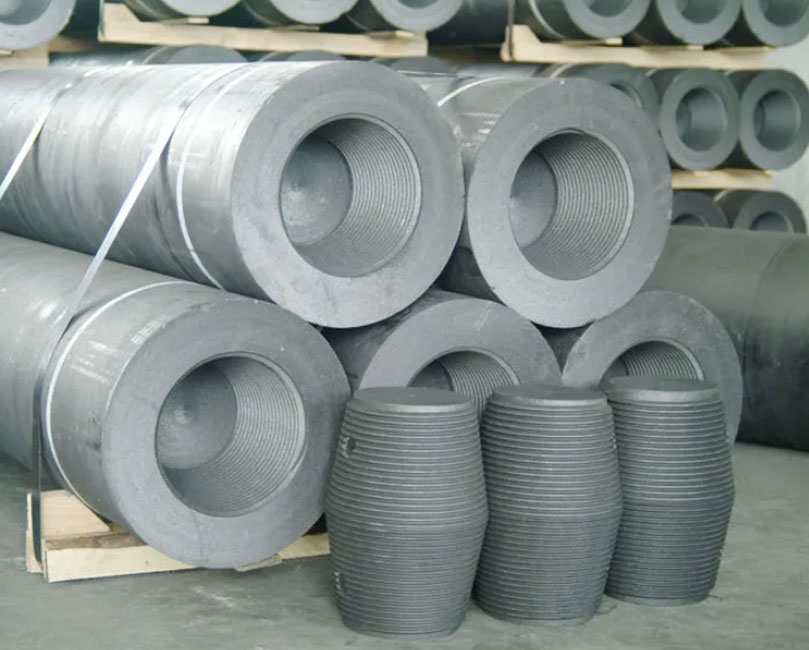
Graphite electrodes are used in electric arc furnaces to smelt waste metal and create new steel. They are an essential part of the steel production process and are expected to continue expanding worldwide throughout the forecast period. However, volatility in the prices of raw materials such as petroleum coke and needle coke can have a negative impact on manufacturing costs. This can narrow the profit margins of graphite electrode manufacturers and limit their growth potential.

 English
Write a Message