
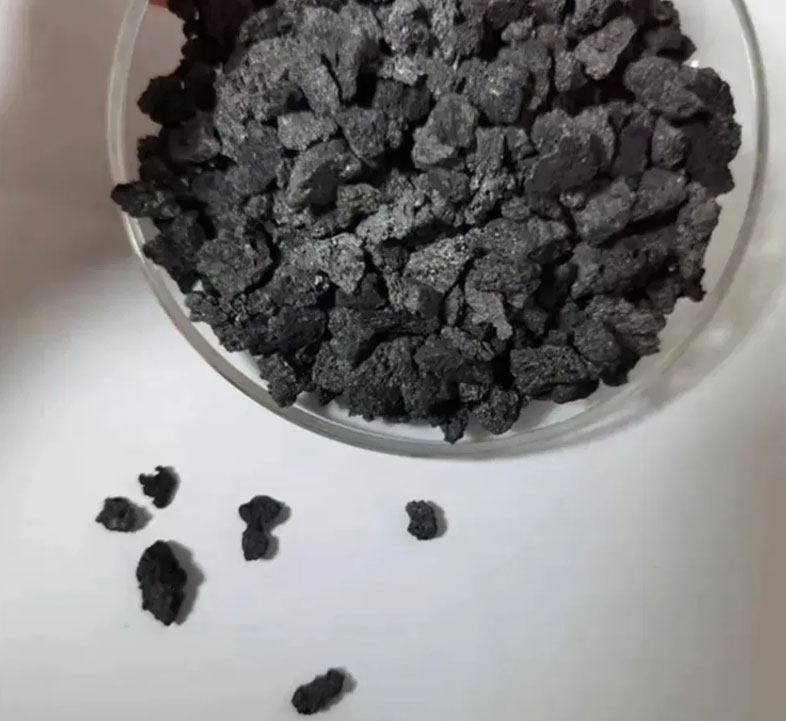
Petroleum Coke and its importance in the steelmaking process are underscored by its widespread utility across various steel production routes. While Graphite Petroleum Coke serves niche, high-end applications, standard Petroleum Coke (PC) remains a workhorse for bulk steel production, particularly in blast furnaces and basic oxygen converters. PC is valued for its high calorific value and abundant availability as a byproduct of oil refining. Its importance lies in its ability to act as both a fuel and a raw material. In some processes, PC helps maintain the thermal balance of the furnace, reducing the reliance on expensive natural gas or electricity. This dual functionality makes it economically attractive for large-scale mills aiming to minimize energy costs. Chemically, PC provides the necessary carbon to transform pig iron into steel. Although it contains more impurities than GPC, proper blending and preprocessing can mitigate these effects, allowing for the production of standard commercial steels used in infrastructure and machinery. Logistics also play a role in highlighting Petroleum Coke and its importance in the steelmaking process. Due to its high density and stability, PC is easy to store and transport in large quantities, supporting continuous operations without frequent restocking interruptions. However, managing its quality is critical. Variations in sulfur or ash content can lead to inconsistent melt chemistry, requiring skilled operators to adjust dosages dynamically. To address this, many mills implement real-time monitoring systems that track PC consumption and output quality. Environmental considerations further elevate its importance. Using PC instead of coal-derived coke can reduce certain emissions, depending on the refinery source and purification methods employed. As the industry seeks circular economy solutions, repurposing oil refinery byproducts like PC into steelmaking feeds supports resource efficiency. In summary, Petroleum Coke and its importance in the steelmaking process are anchored in cost-effectiveness, energy contribution, and supply chain stability. It remains a foundational material for the global steel sector, balancing economic viability with functional performance.

 English
Write a Message