
Petroleum coke is a final carbon-rich solid material that derives from oil refining. Known colloquially as pet coke, it is produced as the result of the final cracking process-a thermo-based chemical engineering process that splits large petroleum hydrocarbon molecules into smaller ones-that occurs in units called coker plants. It is one of the many types of coal-based fuels (the others are derived from coal) and is also a fundamental industrial byproduct in the metallurgical industry, providing both heat and carbon for iron ore smelting processes.
In the metallurgical industry, coke plays an essential role. It is a heat source, providing the energy required for the smelting of iron ore into pure iron and it also provides the necessary carbon source to reduce the slag formed during smelting. Moreover, it is an efficient substitute for fossil fuels in smelting and, hence, it contributes substantially to the metallurgical industry’s sustainability goals.
However, despite its significant contribution to the metallurgical industry and other industrial sectors, petroleum coke has a significant environmental impact due to its high ash content, low energy density, and emission of toxic gases. A variety of mitigation measures have been developed to minimize these impacts including improved combustion efficiency, advanced carbon capture and storage technologies, and the use of alternative fuels such as natural gas.
Until recently, most of the petroleum coke produced in the United States was burned in heaters and boiler applications such as power stations and cement kilns. Its high sulfur content poses problems for cement kilns, where it affects the quality of finished concrete. In addition, the vapors it produces during burning can cause corrosion in equipment and facilities. Its high vanadium content also poses environmental issues, since excess Vanadium may negatively influence the setting time of concrete.
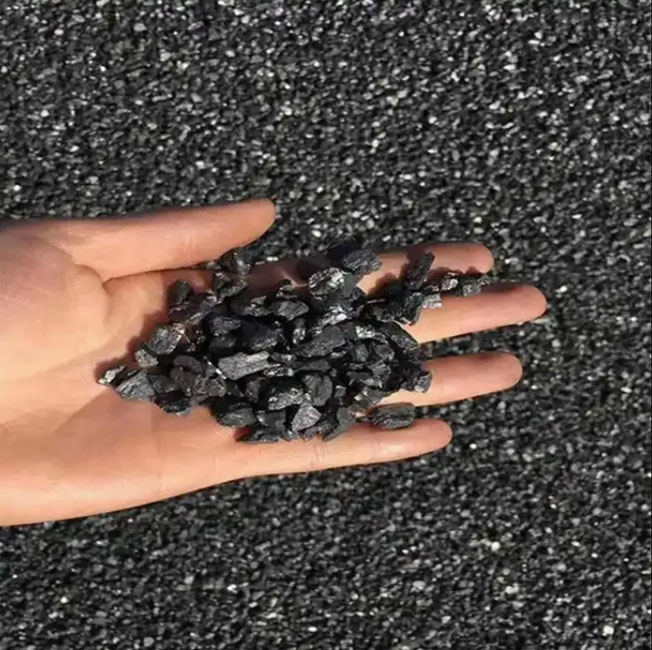
To overcome these problems, it has been proposed to use petroleum coke as a replacement fuel in processes using melter gasifiers to make molten iron and steel preproducts. However, such uses have not been successful so far due to the inability of petroleum coke to provide sufficient combustion energy and heat.
The current invention addresses these shortcomings and enables the use of petroleum coke in a range of industries by providing a process for the preparation of low volatile petroleum coke that complies with emissions regulations. This process includes drying, which is critical for ensuring that calcined coke does not contain any moisture prior to its industrial use.
Drying the calcined coke significantly improves its energy density and makes it more suitable for demanding industrial environments by reducing the pore size in the material. The calcination process also involves densification, which further enhances the energy density of the coke while improving its flow properties for easy handling and transportation. Lastly, the characterization of petroleum coke is crucial for understanding its behavior in these diverse industrial applications and enabling the development of optimal processing strategies. In this context, we have studied the characterization of different types of petroleum coke by means of optical texture analysis, FTIR spectroscopy, hydrogen donor ability and thermogravimetric analysis of the plastic stage.

 English
Write a Message