
In the steel industry, petroleum coke (sometimes referred to as “met coal”) is a solid byproduct of petroleum refining that can be used as an electrode carbon bar for electric arc furnaces. It is also a fuel source for blast furnaces. Typically, it is burned to produce heat and steam for iron ore smelting processes in which molten iron and carbon dioxide are produced. These emissions are undesirable from a sustainability perspective, as is the waste stream that is produced by the coke combustion process. It is desirable to repurpose these byproduct streams from the oil and gas processing industry toward more sustainable end-uses, particularly with a focus on low carbon and zero emission technologies.
Historically, petroleum coke has been burned as a boiler fuel in electricity generation plants. However, the high sulphur and heavy metal concentrations in petroleum coke make it less than ideal as a fuel for this application. To address these concerns, the coke is mixed with metallurgical coal in the coal-fired coking ovens to form a low-sulphur metallurgical coke. Despite the benefits of this practice, this coke is still less than desirable as a boiler fuel because it can be difficult to pulverize to a fine particle size and has limited solubility in carbon disulfide.
A new way to utilize petroleum coke in steelmaking is to use it as a fuel source in processes that utilize melter gasifiers. This approach combusts the coke in an oxygen-deficient atmosphere to generate carbon monoxide and hydrogen. This is known as direct reduction. The advantage of this process is that the high-sulfur petroleum coke is combusted to generate these two gases instead of producing sulphur and nitrogen oxides as would be the case in traditional smelting processes using a blast furnace.
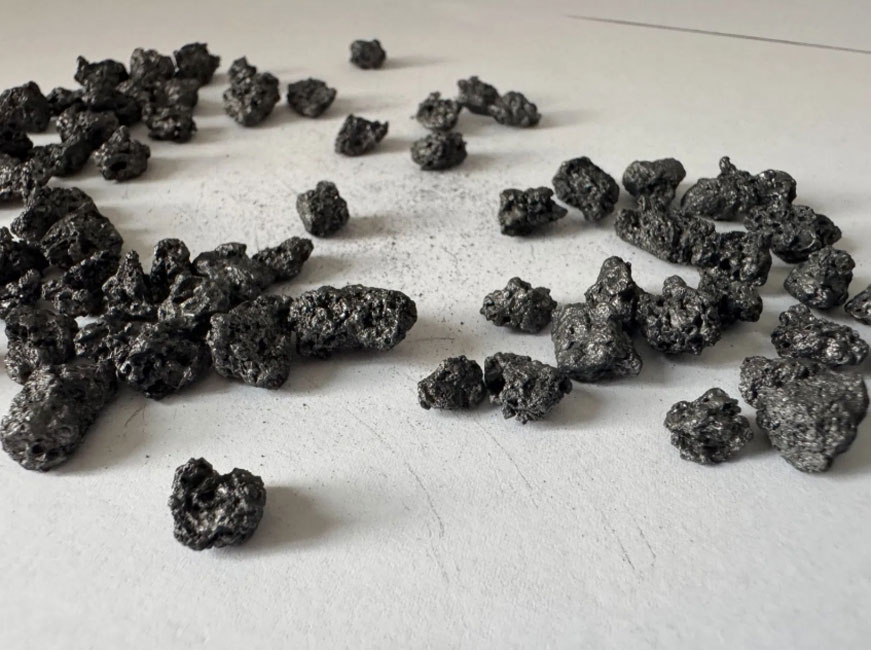
The quality of the petroleum coke depends on the manner in which it is prepared for iron making applications. The highest quality coke is needle coke, which is made by chopping high-quality aromatic feedstocks such as Fluid Catalytic Cracker decant oils. The lowest quality coke is fuel coke, which has a sponge-like or honeycomb morphology and is formed from agglomerates of spherical coke particles.
To prepare the coke for iron making, it is heated in a coke oven without air to temperatures up to 2,060degC (1,125degF) until most of its volatile matter has been released. The result is a hard porous material called coke, which has the same thermal properties as coal. The coke is then ground into a fine powder and reacted in an electrolyte to produce a low-sulfur metallurgical coke (sometimes referred to as “metal coal”). Coke used for this purpose has been characterized by optical microscopy. The coke has been found to have a layered structure, which is believed to facilitate layer exfoliation and adsorption of hydrocarbons. The coke also has a lower specific gravity than coal. This means that it burns more easily and has a lower melting point. In addition, coke reduces the concentration of trace metals in the molten iron and steel preproducts.

 English
Write a Message