
Petroleum coke is a solid byproduct of crude oil refining that can be used in a variety of industrial applications. It has a high carbon content and offers significant value in energy production, metallurgical processing, and the manufacture of advanced materials. However, the demand for petroleum coke must be balanced against environmental concerns and shifting energy practices.
Petroleum coke (or Petcoke) is a fuel derived from the thermal cracking process of crude oil. It is a residual byproduct of the distillation and destructive distillation processes in crude oil refining, which separates large petroleum hydrocarbon molecules into smaller ones through heat-based chemical engineering. This process yields byproducts including gasoline, gas oil, and petroleum coke. The coke is a dark, solid, carbonaceous material with a honeycomb structure that contains high amounts of sulfur and nitrogen.
The primary uses for petroleum coke are to produce metallurgical coke for the steel industry and to make a substitute for coal in power generation. In addition, it is a valuable component in the manufacture of graphite anodes for the electrolysis of alumina to produce aluminum. Its low reactivity and resistance to corrosion in air at high temperatures make it an excellent alternative to coal as a fuel for power generation and coke ovens. Modest quantities of petroleum coke are also mixed with coal in coking ovens to reduce the reactivity of the resulting metallurgical coke and to improve its mechanical strength.
A key function of petroleum coke is to act as a reducing agent in the conversion of iron ore into molten iron during the steelmaking process. Its high density, porosity, and carbon content enable it to absorb the necessary oxygen to revert iron oxide to iron in the blast furnace (BF). This is important, as a reduction reaction must occur to avoid the formation of slag and to ensure optimal metal recovery.
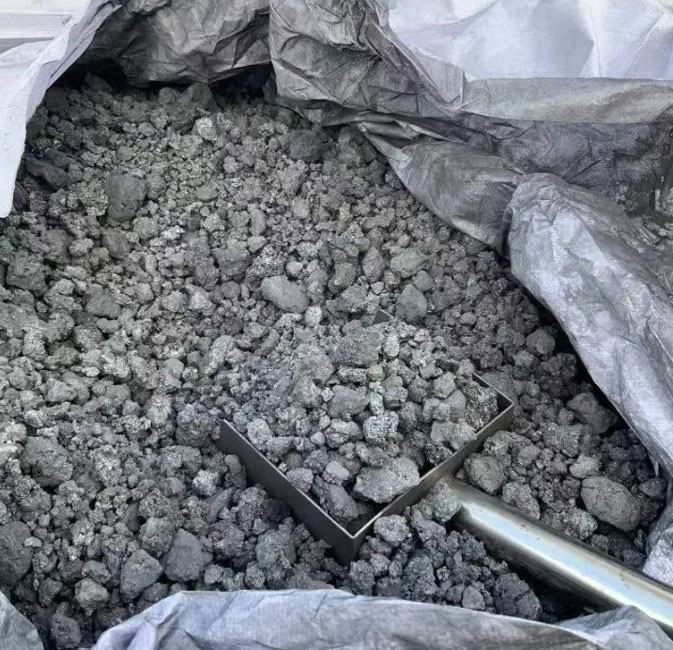
Various types of petroleum coke are produced during the refinement process, with the two main categories being green coke and calcined coke. The latter is a refined form of the material that has been subjected to a heating and cooling process, called calcination, which removes volatile components, such as hydrogen, sulfur, and nitric oxides, from the original green coke. The calcination process can be carried out at a range of temperatures, with higher-quality metallurgical coke typically resulting from calcining in the region of 1,200°C.
Due to its lower moisture content, higher fixed carbon, and isotropic crystallinity in the c direction, calcined petroleum coke is an attractive fuel for cyclone boilers. It is also suitable for cofiring with other sources of opportunity fuels, such as biomass, in fluidized bed and pulverized coal combustion systems. However, it is essential to understand the chemistry of the ash that is produced in these combustion systems so that the slagging and fouling problems associated with cofiring can be mitigated. This is particularly important for coke ashes, which are known to contain significant concentrations of trace elements such as vanadium and nickel.

 English
Write a Message