
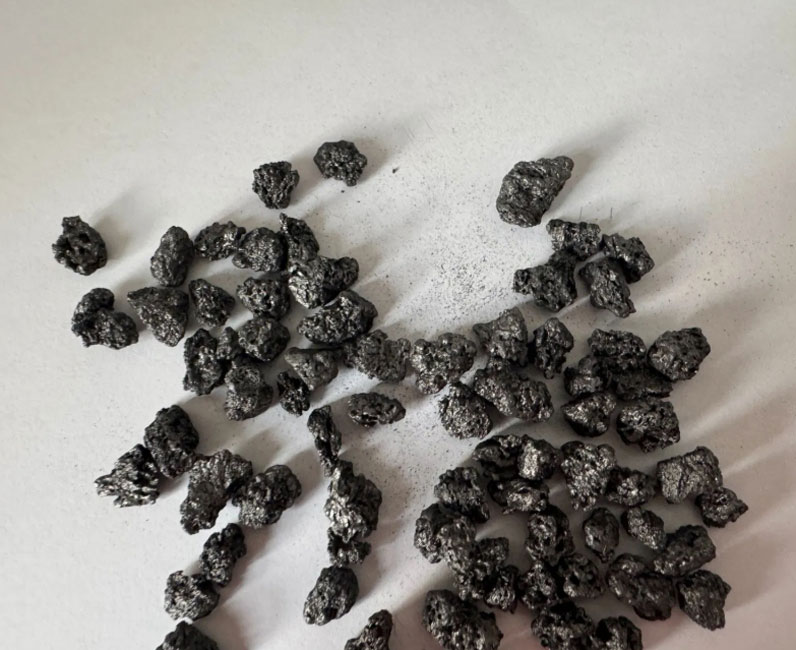
Petroleum coke (petcoke) is a solid carbon-rich byproduct of oil refining. It is a result of a final cracking process of the long chain hydrocarbon molecules in crude oil, which occurs in units known as coker plants. It is produced by heating the heavy residues from crude oil refining in a controlled environment. The resulting product is coke, which can be fuel grade or anode grade depending on the residual sulfur and metals content. It is also a raw material in the manufacture of graphite anodes for aluminium and steel smelting.
The production of petroleum coke is a critical step in the refinement of crude oil to fuels and other products. It is essential for maximizing the utilization of heavy crude residues and minimizing waste and environmental impact. The coking process converts these residues into useful products and generates valuable energy while reducing emissions of greenhouse gases and other harmful pollutants.
Coke plays a vital role in ironmaking by providing low ash fuel and energy for the blast furnace. It also eliminates or minimizes slag formation in direct reduction ironmaking, and provides the carbon needed for carburizing the liquid hot metal. In addition, coke is a source of high-boiling point fuel and a heat transfer agent for the gasifier.
A schematic diagram of a delayed coke unit is shown in Figure below. Residual petroleum from the refinery is heated in a delayed coke reactor to temperatures over 1000°C. The heavy and viscous crude residues break down, releasing volatile vapors that condense to form a combustible gas called coke. Coke is then pumped through a series of coke drums and is subjected to pressure and heat in the presence of steam to further purify it into a fuel-grade coke.
This coke is used as a fuel in power plants and industrial applications. It can be burnt to produce electricity and heat or converted to synthesis gas (CO/H2), which is then used as a raw material for the manufacture of synthetic fuels and other chemicals. Coke can also be further processed to make calcined petroleum coke (CPC), which has multiple uses in the metallurgical industry.
CPC is used to make graphite anodes for aluminium, steel and titanium smelting. It is also employed in other industrial applications that require a high-quality carbon with low sulphur and metal contents. Quality control of calcined petroleum coke involves physical inspection and chemical analysis to guarantee that it meets the required industry standards. It is also important to store the CPC properly, ensuring that it does not absorb moisture and other contaminants that could affect its performance and quality. The proper storage and handling of metallurgical coke ensures that it stays competitive in the market and satisfies customer needs. It is therefore important to use a reliable CPC supplier that offers a variety of physical and analytical testing options to maintain consistent, high-quality products.

 English
Write a Message