
Petroleum coke is a critical byproduct of the crude oil refining process, offering a range of industrial applications and contributing to the production of advanced materials. However, its production and use have environmental impacts that must be addressed. The development of technologies to minimize these impacts and align petroleum coke with global sustainability goals will be key for sustaining its role as an essential energy source and material for the future.
The coking process converts heavy crude residues into useful products, while also maximizing refinery efficiency and minimizing waste. The final product, called coke, is a solid carbon material with low ash content. It can be further processed to form various carbon products and used as a fuel. The most important applications for petroleum coke are as a carbon additive to make graphite electrodes for the aluminum industry, as fuel in power plants, and as a substitute for coal in cement kilns.
Coke produced in the United States can be divided into three types, depending on the type of coking technology used: delayed, fluid and flexi. Most of the petroleum coke in the United States is produced using delayed technology.
A significant portion of petroleum coke is used to produce electricity in coal-fired power plants. Its high energy density makes it a good replacement for coal, particularly in power plants designed to burn high-ash fuels. However, owing to the high sulfur and metals content of petroleum coke, it is not suitable for all power plants.
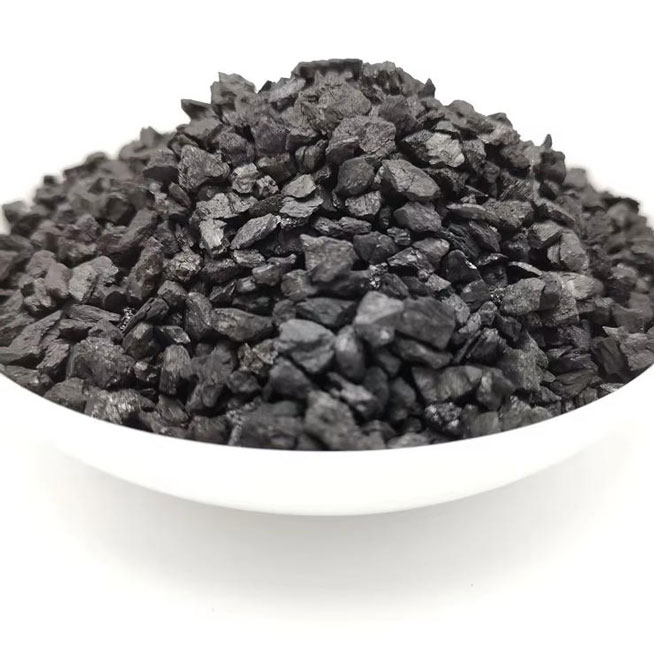
Cement kilns require petroleum coke to be burned in combination with coal to maintain proper ignition and flame stability, as well as to control the amount of sulfur dioxide emitted into the air. However, the high vanadium content of petroleum coke poses problems, as it causes finished concrete to deteriorate.
Steel manufacturing requires the use of a reducing agent to turn iron ore into molten steel. Calcined petroleum coke is the most common reducing agent in blast furnaces. It is also used as an additive to manufacture graphite electrodes for the aluminum and silicon industries, and in refractory materials that are needed for building equipment that can withstand extreme temperatures.
Petroleum coke can be used as an alternative to natural gas for some liquefied petroleum gas (LPG) plants. Its higher calorie content per unit of volume makes it more economical than natural gas. However, it does not provide as much thermal energy as natural gas.
Other uses of petroleum coke include generating carbon black, which is used as a pigment in printing and writing inks, and activated carbon, which is used for water treatment and air purification. It is also being studied as a potential alternative to fossil fuels in fuel cells, which generate electricity by combining hydrogen and oxygen.

 English
Write a Message