
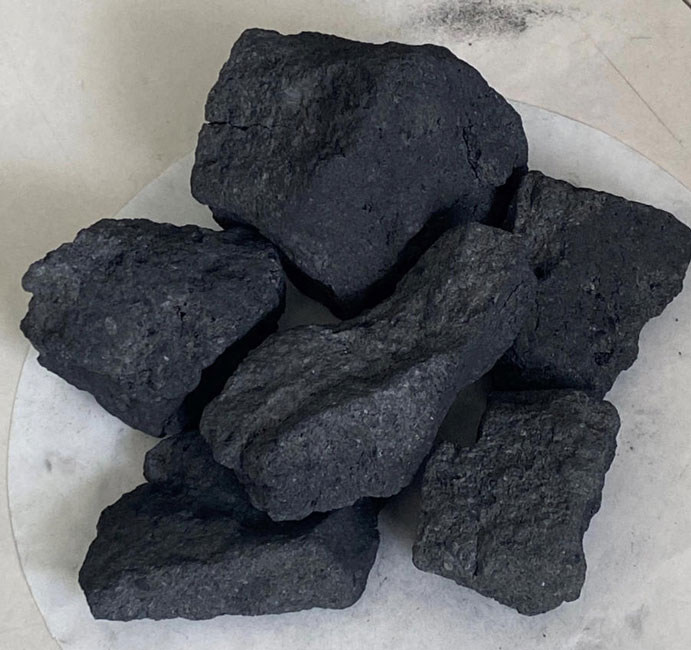
Graphite Petroleum Coke in Silicon Carbide production plays a crucial role as a high-purity carbon source in the Acheson process. Silicon carbide (SiC) is a wide-bandgap semiconductor material used in abrasives, ceramics, and power electronics. The synthesis reaction involves heating silica sand and carbon in an electric resistance furnace at temperatures exceeding 2,000°C. Here, GPC is preferred over other carbon materials because of its low ash and impurity content, which prevents contamination of the SiC crystals. High-quality Graphite Petroleum Coke in Silicon Carbide batches ensures uniform grain growth and superior hardness in the final product. Impurities like iron or aluminum in the carbon feedstock can act as fluxes, altering the crystal structure and degrading the abrasive properties of SiC. Therefore, producers rigorously test GPC for elemental composition before mixing it with silica. The graphitic nature of the coke also aids in heat distribution within the furnace core, promoting efficient reaction kinetics. As the demand for SiC wafers in electric vehicles and renewable energy systems rises, the need for ultra-pure carbon inputs intensifies. Suppliers specializing in Graphite Petroleum Coke in Silicon Carbide applications must offer consistent particle sizes to facilitate homogeneous blending. This consistency reduces energy consumption per ton of SiC produced and minimizes waste. Consequently, selecting premium GPC is not just a raw material choice but a determinant of product quality and competitiveness in the advanced ceramics and semiconductor markets.

 English
Write a Message